Introduction to Hypnosis and Self-Hypnosis
Hypnosis is a state of consciousness of complete presence to oneself and to the outside.
Natural function of the mind thanks to which many benefits can be obtained, hypnosis allows a cerebral synchronization of the two hemispheres for a perfect optimization of human resources.
The hypnotic process consists of focus and concentration of attention within oneself to draw on the whole range of the individual's abilities and make them usable, ready for use.
The word HYPNOSIS scares, triggers fear and curiosity at the same time, because, although practiced for millennia and recognized as a practice for well-being by the World Health Organization, this matter still fascinates today because veiled in mystery, people are attracted and suspicious at the same time.
In fact, the hypnotic trance recalls scenes of videos, films or shows of different kinds in the collective imagination where the hypnotist does and makes absurd things do to the hypnotized subject, apparently without them being able to oppose it.
Even today, ordinary people when they hear about trance report a hearsay that they would like the subject induced into a hypnotic state to completely lose control and self-control, in a sort of oblivion, even reaching total amnesia.
People often claim to "not believe it", as if it were a rumor, a sorcery, a legend, a faith, a magic or a trick of magic. The current state of the facts denounces a lack of social education, hypnosis is still too often experienced by the community as a danger rather than a portentous natural remedy. Because of this false conception that wants the trance similar to a state of deep coma, often those who try it for the first time are disappointed, because they are well present and lucid, as well as being perfectly conscious throughout the session.
I deal with trainings as well as having a cabinet where I receive privately. In the first years of professional experience and even today, despite the preliminary explanations, how many times he is in the studio or in the classroom after returning from the first hypnotic experience the person exclaims: "But I heard everything, I was present, I WAS THERE!", as if expecting to go to another world.
For this reason, in professional practice, before starting a hypnosis session with someone who is experiencing this particular state of mind for the first time, it is strongly advised to immediately clarify this point, explaining how the hypnotized subject will never do anything against his will, also because, as we will learn during these lessons, he is the protagonist of his own experience, the professional must be considered as an expert guide of the unconscious territories of the mind.
It is good to understand how this particular journey takes place within oneself and what it entails on the perceived level. Through the hypnotist the person reaches both the inner and the higher self, guided step by step through the maze of his subconscious with different verbal and paraverbal as well as non-verbal models, to ensure that he can find all the necessary resources within his mind. resolve a problematic state and make lasting changes.
It has been shown that most of us use only a paltry 5% of our brain capacity; others, the most talented who have made history or succeed with excellence in the course of their activities, have come to exploit up to 10% or a maximum of 20%.
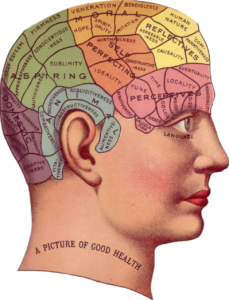
Based on the fundamental principle that recognizes anyone, without exception, the ability to improve and on the basis of an iron conviction that we can all make the most of our skills, reflection leads to consider the possibility that these super-powered characters have understood what can be called the "secret": “segreto”take place for instinct and imagination! By curbing the monopoly of reason, which very often causes a narrowing of the cognitive field by framing people in increasingly complex dynamics to be rude, one can bring in a complementary but different logic, that of creativity.
To better understand this concept, it is necessary to know broadly how our mind works, to have a simple smattering of the structure and brain mechanics.
Basically the brain can be divided into two zones or hemispheres: right and left.
It is that part of the "Cartesian" brain, directly connected to rational thought, logic, deduction, planning and analysis. Reason in a procedural way with sequential, mathematical and structured terms. In a modern key the linear part of the mind could be defined, this hemisphere is involved for the verbal logical communication, because it is used to elaborate the information sent by the nervous system from the five senses to which it is directly connected.
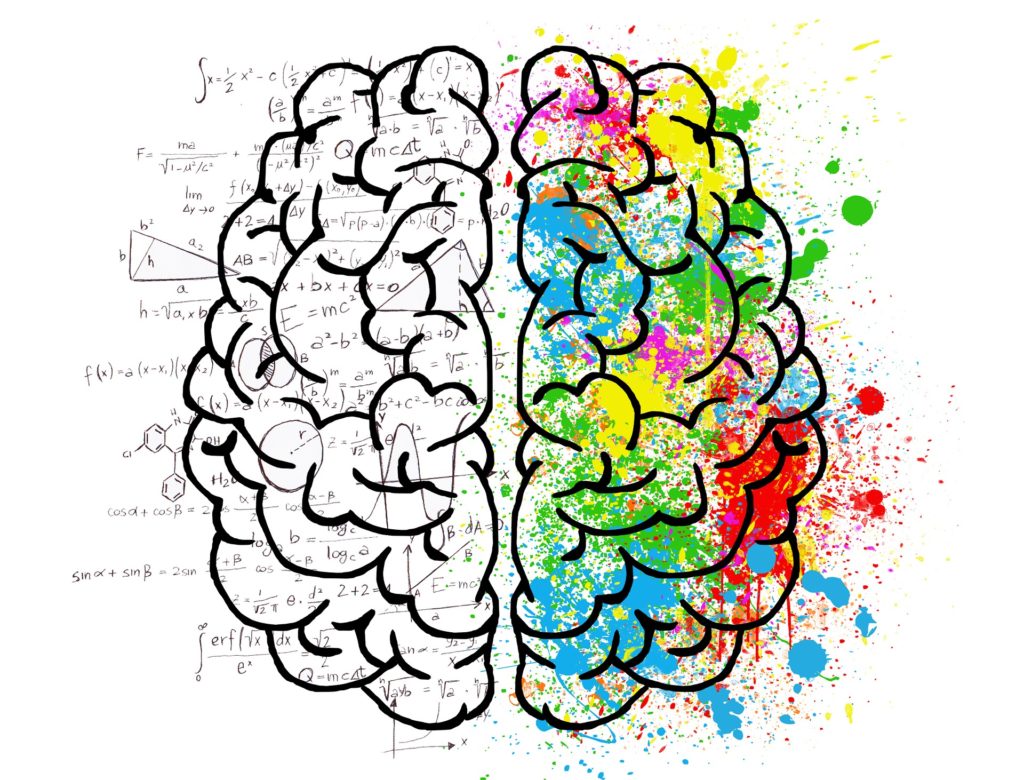
The "RIGHT" hemisphere is the creative part of our brain, connected to emotion, dreams, sensations. It is very persuasive because it is devoid of rational logic, dedicated to broad, imaginative and intuitive thinking. It is the part that the hypnotist aspires to create the basis for improvements.
In this cerebral area the mental map containing the neural programs of each individual is deposited.
Our mind turns out to be a kind of interface of reality: through the senses, the external stimuli of the world are sent to the rational part of the brain (left), which filters and processes this information based on programs deposited in the creative part of our brain ( right).
From this cerebral cooperation arise behaviors and moods like malaise or well-being, success or failure and so on.
Then we can deduce how, in order to obtain a change that allows a full and satisfying existence, facing obstacles on the way and taking decisions with more serenity, it is necessary to make changes in the deepest convictions, to re-evaluate the most deeply rooted beliefs and understand which ones are the values that belong to us and condition our behavior, because every mental map is created on the basis of what the person believes, the one he is convinced of. In this regard I conclude this brief introduction with a quotation
"By always adopting the same behaviors, you always get the same results."
If you are reading these pages maybe you are looking for a natural tool to improve your life and you realize that something is wrong, maybe you always fall into the same mistakes of the past, you set goals that you can not achieve, proclaim good intentions that then disregard, good intentions that then really do not respect.
What happens inside us, why doesn't everything work as we program it?
The answer is very simple: the same strategies dictated by internal programs are always used which leave zero alternatives to the procedure (perhaps even once effective) which has stabilized over time by eliminating free will. Slaves of an unconscious routine that leaves no escape, of behavioral habits acquired on the basis of beliefs that operate in the same way as real diktats, categorical imperatives and internal orders that we respect without blinking and that act regardless of us, we always work with the same methods, having the same attitudes and making decisions using the usual evaluation schemes. In essence, even if the will to change things is strong, we always behave in the same way despite ourselves.
Well, if you want things to change, you must first change yourself
If you don't change anything around you change
To make a significant improvement in our lives it is necessary first of all to make a change in the beliefs and beliefs that influence our actions, thinking and feeling, eliminating negative and self-abusive ones to replace them with more functional ones, which can promote personal growth instead of hinder it.
A job of this type is able to lead straight to the goal, to what we want for us, finally in alignment with our deepest values for the realization of our personal mission of life.
To realize our destiny the first to have to change is us, working on past experiences and lived events that have built the basis of our being, thinking and acting.
To go beyond the habit of ourselves, we need to change what we believe about ourselves and the world around us: just think that most mental programs are defined by the mind within the seventh birthday. At that time it was children and yet the brain had already established the behavior of the adult that will be.
La buona notizia é che questo processo mentale é tutt’altro che irreversibile.
We were childs and today we have grown, we can become the architects of our earthly existence: yesterday has already passed, it is absurd to face life exclusively with the structural logic of childhood, most of which we ignore its existence.
Decisions taken when we were childrens can influence today's reality, interpersonal relationships, professional and social life. Today things can be dealt with better then, with adult awareness and for this to happen it is good to work directly on mental programming by reworking the programs and adding new resources that could be missing when they were created.